← Back to portfolio

Journi: Bill Inspection & Pay

Health care consumers overpay for their care more often than they know. Journi set out to catch the errors and make paying less of a nuisance.
CompanyJourni (Cambia Health Solutions)
RoleDirector of User Experience
FocusMobile app, bill review & pay
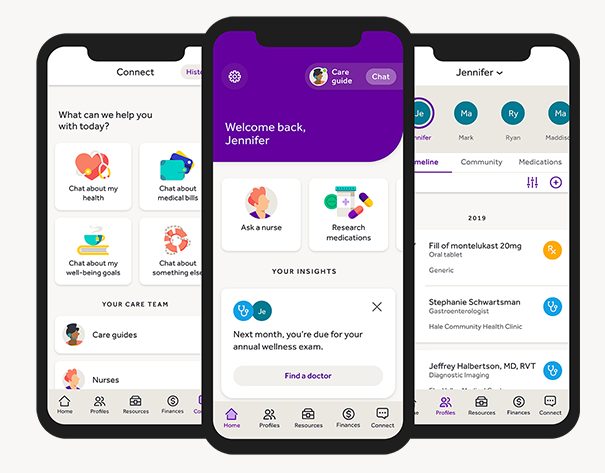
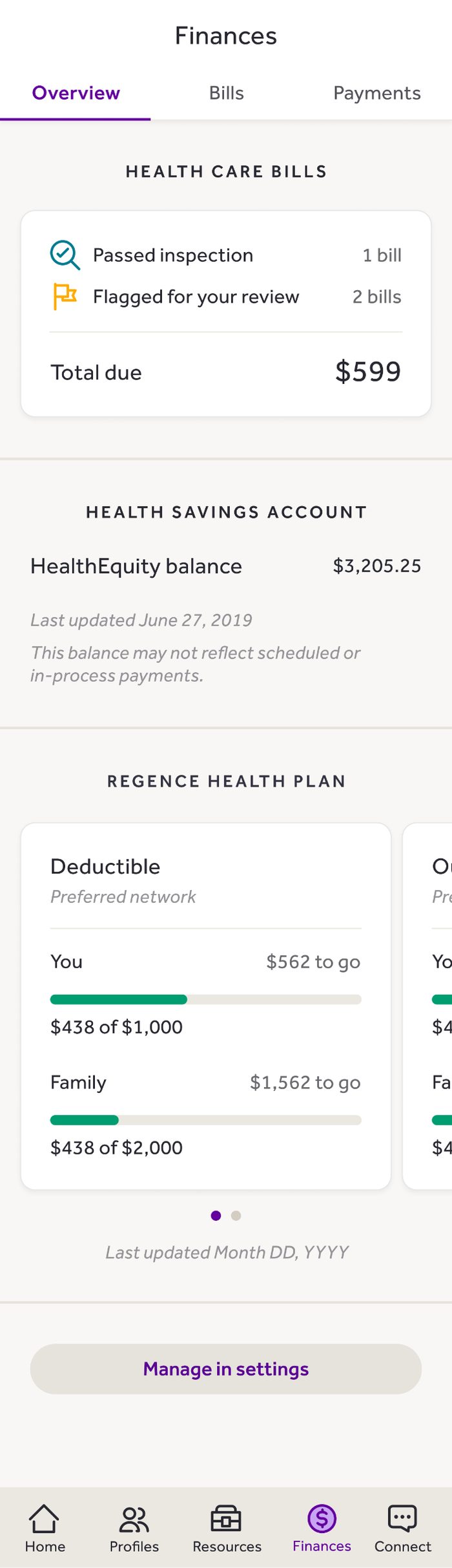
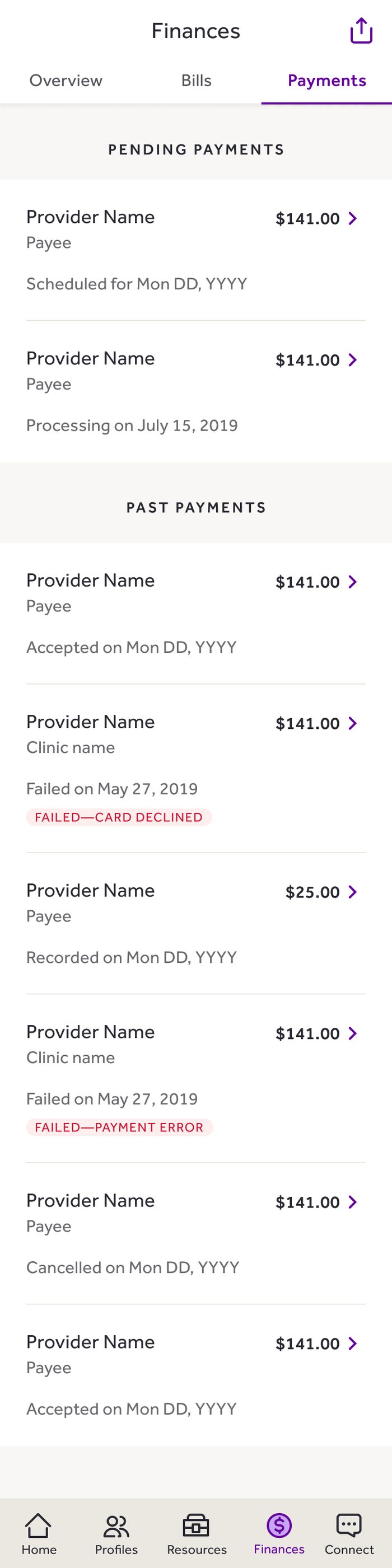
Journi app home screen Journi finances overview screen Journi bill detail screen
Problem statement

Care costs sneak up on people

  • Bills can be miscoded
  • Double-billing can occur
  • Consumers may be making financially harmful choices
  • Paying bills can be a nuisance
How might we help users save money and time paying bills?
What we were working with
  • Existing AI training data from being part of a health insurer
  • Commonality analysis of which bills were usually sent back
  • A database of codes and combinations most likely to be erroneous
  • Estimated average annual cost per person of errors — roughly $80/family/year
What we learned from customers

People wanted this — but on their terms

  • In "buy a feature" exercises, customer panels consistently ranked billing issues high
  • One person per family typically handled all things health — the "Household CEO"
  • Asked about their health journey, most people related personal stories; asked what they wanted, most mentioned lower costs and time savings
  • Customers lamented that each provider had a different patient portal, with separate logins and passwords to manage
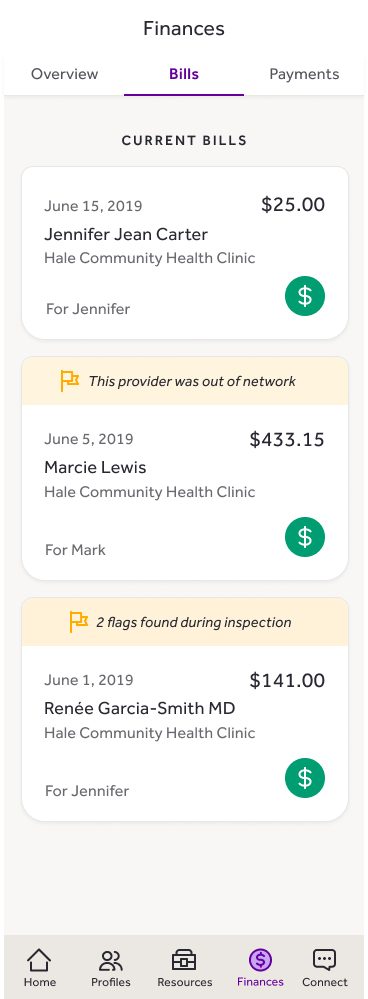
Journi bill inspection detail screen
Challenges

Three problems that shaped the design

01

How to convey potential issues

The analysis wasn't 100% accurate, and we didn't want to unnecessarily alarm people or add stress — some states even required explanation. We named the issues "flags" and chose a non-red color: yellow, for caution, distinct from a hard failure like a declined card.

02

Self-paid vs. app-paid bills

A mix of bills paid inside and outside the app created false issues. We couldn't require people to be fully "all in" on bill pay — so how could someone be expected to mark a bill they or a spouse had already paid elsewhere?

03

Behind-the-scenes limits of the pilot

The bill pay pilot used an EOB (Explanation of Benefits) instead of actual bills, and bills needed manual verification — meaning the program wasn't ready to scale. We developed language for a "closed" bill — no further user action required, but not technically paid — leaning toward comprehension over perfect accuracy.

Success metrics

What we watched, in the early phase

Application usage

Sessions per month, per week

Bill pay usage

Percentage of bills paid

Chat usage

Engagement with assistance

Contentment

NPS, SUS score, and satisfaction survey changes

Results

A small group loved it. Most didn't need it enough.

  • A small subset of users were delighted and fully engaged
  • Analytics showed a lack of trust — users frequently returned to the payments page even without bills to check
  • Those who paid one bill in the app tended to pay all of them there
  • The bill mitigation team had a roughly 50% success rate correcting flagged bills once a customer engaged via chat
Lesson: an app that replaces or introduces new habits needs daily reasons to engage. Most people don't relish thinking about their health costs — even though Journi was free, few developed the habit or had the need to use it, and average engagement stayed under two uses a month. A fully-staffed customer engagement team had already formed before the product even hit MVP.